


I often think about the concept of being a fan of something. We all know what it means to be a fan of something right? According to dictionary.com, it means:
any device for producing a current of air by the movement of a broad surface or a number of such surfaces.
Apologies, mixed up the definitions. It states:
an enthusiastic devotee, follower, or admirer of a sport, pastime, celebrity, etc..
Yes, the definition on the website includes the et cetera. The reason I bring this up, is that within the context of video games, being a fan of a certain game, or game series, can mean different things to different people.
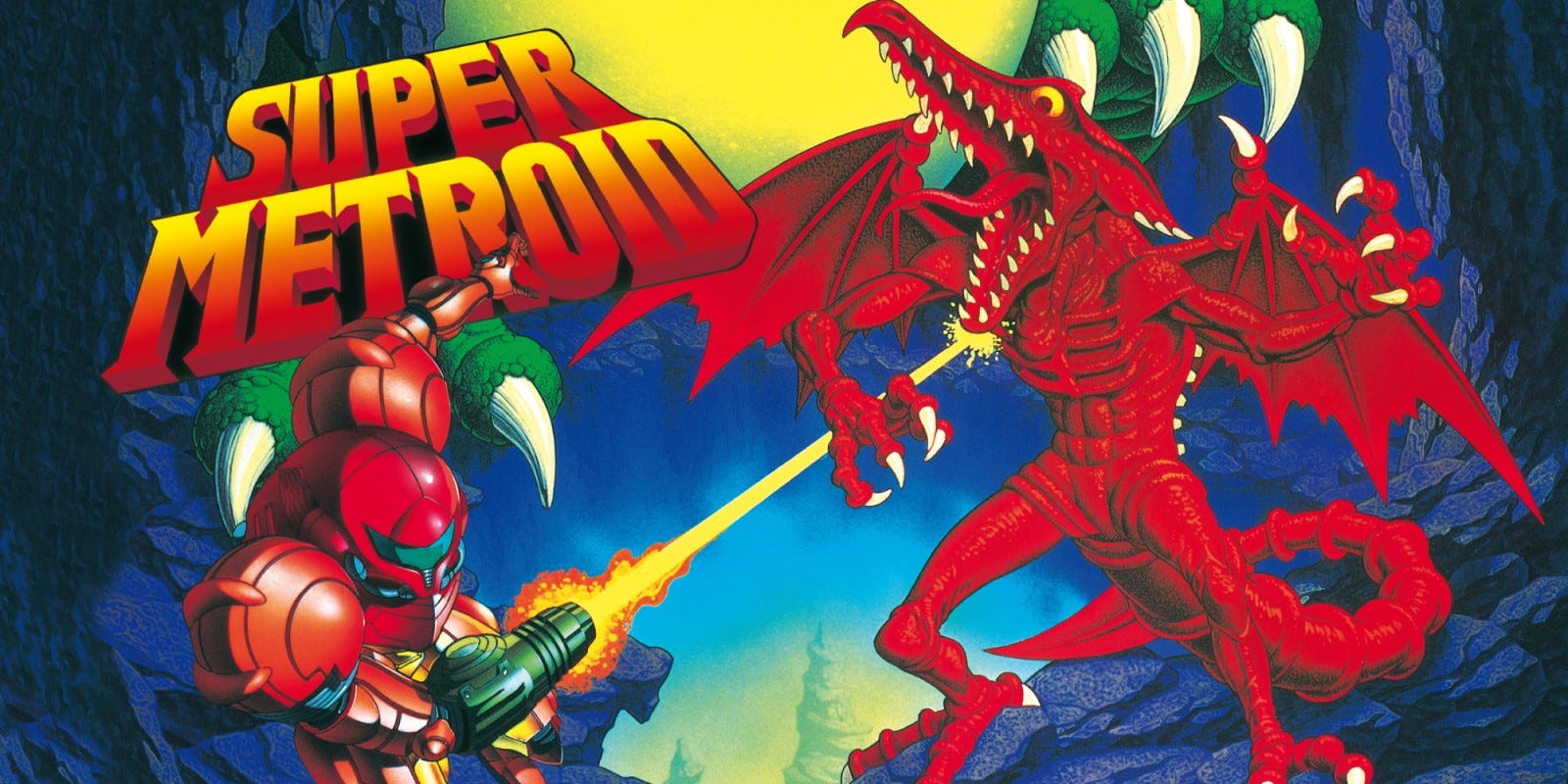
For example, my favourite game ever made, is Super Metroid on the Super Nintendo. I love everything about it, from the music, to the graphics, the gameplay, and the overall atmosphere, I think it’s just perfect. Over my life I’ve completed it a fair few times, every couple of years, and I always have as much fun as the first time I played it.
However to some people, they would not consider me a fan of that game. I don’t have an encyclopaedic knowledge of the game, I don’t know where every secret is off by heart, or know the fastest way to play it, or even the best way. Even though I’ve played it multiple times, I’ll still need to refer to a guide from time to time to find some of the more hidden items.
In addition, I haven’t played much else in the Metroid franchise. I’ve played Metroid Dread, and only recently started playing Metroid Prime for the first time. I haven’t played really any other Metroid game, of which there are many. There are also several popular fan versions of Super Metroid which some would say are now intrinsic to enjoying the series, and any fan of the original would love them.
So, if I’ve only played a couple Metroid games, and I’m not overly knowledgeable on them, am I truly a Metroid fan? Or am I even a Super Metroid fan? I would say I am, but many would say I’m not, I’m no more than a person that casually enjoys those games.
So what does it truly mean to be a fan? The definition states a couple of things, notably, enthusiastic, and devotee. I am certainly enthusiastic about that game, and will talk about it as much as the world will let me. I am probably devoted to it as well, in the sense that I don’t think my affection for the game will ever be diminished.
All of this brings me around to the concept of gatekeeping. For those blissfully unaware of what that is, it’s essentially the method by which some people prevent other people from joining in communities on a particular subject, because they don’t believe said person is sufficiently knowledgeable, on that particular subject.
A simple example of this, is going up to someone wearing a specific bands shirt and asking them to list five of said bands songs. The intention is to embarrass the person wearing the shirt, and give the speaker some sense of superiority complex. In gaming terms, it’s often applied to people asking simple questions about a game, to which the receiver will brush them off, usually in a rude manner.
It can sometimes be more broad, a famous example is when Woody Allen was interviewing model Twiggy, then seventeen, and asked who her favourite philosopher was, with the intention of making her seem stupid. She turned it around by asking him who his was, and he equally could not answer. In this case, Allen was gatekeeping against people like Twiggy being allowed into so-called intelligent circles.
The point of all this is though, why does anybody really care about what other people enjoy, and why do they feel the need to try and prevent certain people from engaging with a subject. There are arguments around misogyny being a factor, and that is certainly true, but I think video games in particular may have a simpler answer.
Video games can be quite unique in that it is quite an intimate hobby. For a lot of the time, it is just one person, sitting in front of a screen for hours at a time. You absorb that game alone, all the story, developing your skills and eventually beating it. In doing so you develop a connection with the game, and a unique experience. Unlike movies, or music - one persons experience of any particular game can be very different than another persons experience.
In this manner, since your experience is your own, and you’ve developed a connection, you somewhat feel the need to protect that experience. If you really loved a game, I think there’s a small part of you that wants that experience to be unique. That you developed a connection with that game that nobody else did, that you understood or played it in a way that nobody else ever has.
Sharing that experience with others could naturally be a slightly frightening perspective. If you learned that someone else is better at the game than you, or had a stronger reaction, or understood the story on a deeper level - it may in someway diminish your experience. Everyone in the world is longing to be unique.
I think gatekeeping, and therefore calling people fake fans, is just an extension of this. By keeping the community small, you don’t have to accept that other people could have enjoyed this game in their own way. By defining who is truly a fan and who isn’t, you are by definition making that group of people as small as possible. You are creating a small club, where you can feel unique.
Ultimately, the point of this big rambling article is just a way for me to say to people - take a step back once in a while. If someone is telling you about their new hobby, a new game they’ve played, something they have seen which they really liked - just listen, and chat with them about it. Don’t feel the need to impress your vast knowledge on to them and make them feel less than. And this goes both ways - if someone is really passionate about something and has built up a lot of knowledge, talk to them about it too. Learning something new is fun.
At the danger of sounding overly sentimental, we’re all on this earth for a short time. Let’s do what we can to support each other, and hopefully have a little bit of fun along the way.
I admit when I was younger I did gate keep on a lot of things. My intent was always good, but as I've grown older I realize how dumb it was.
Now when I tell people of things or talk of them, I sense that smugness and entitlement I felt I had at one point. Usually it's someone younger than me who is trying this.
For Metroid, I played almost every Metroid, when a new one comes out I jump right in. But it's for me and I don't care about fans or who isn't now. A person who enjoys something wants to share it with others and finding others who agree is wonderful. But, some people may not be into something as much as you or more than you. And that's okay, we all need to learn to enjoy it for what we want. Not what others feel we should.
I'm glad you have found fun in the game, and like you I still dig out a guide for the game, or any game really cause I don't rember every little step. It makes it fun in that way, what's old is new. A way to recapture that spark that made me enjoy it in the first place. That's more important than what a person thinks of me being a fan or not.
In terms of music/genre I think someone is a real fan if they're actively seeking more of it and have a good grasp of their own tastes; I don't label most people who play games 'gamers' for this reason. To me, playing the yearly Fifa and CoD and maybe grabbing Ghost Of Yotei because it's popular doesn't make you a gamer.
Someone who is a gamer I feel is looking to expand their palate all the time and to challenge their pre-conceived tastes. I feel this way in other mediums too. I'm basically a goth/metalhead music wise and to me, liking The Cure's darker albums or Bela Lugosi's Dead doesn't make you a goth.
I think people gatekeep out of a deep-seated fear of homogeneity: all over the world today, people wear the same clothes, eat the same food, watch the same films and increasingly are speaking the same language this is a way of people saying "Well, we've all been exposed to this but if's not just a pastime for me, it's important."